While the frequency of hypoxic therapy varies based on your situation, we find that most clients benefit from two to three weekly sessions.

Whether you’re dealing with substance misuse, anxiety, depression, dual diagnosis or another mental health issue, you can significantly improve your recovery journey by training your body to better withstand psychological and physical stress. Here’s where hypoxic therapy comes in.
At The Sanctuary, we use science-based treatments, such as hypoxic therapy, to boost your stress-coping skills. We’ll personalize the recovery program to your situation and needs to help make your body more resilient.
Hypoxic therapy will help you feel better in treatment by reducing inflammation, expediting detoxification, regulating your nervous system, alleviating depression, and improving sleep. Bottom line, the better you feel, the more energy you will have and mental clarity to address your core issues while in treatment.

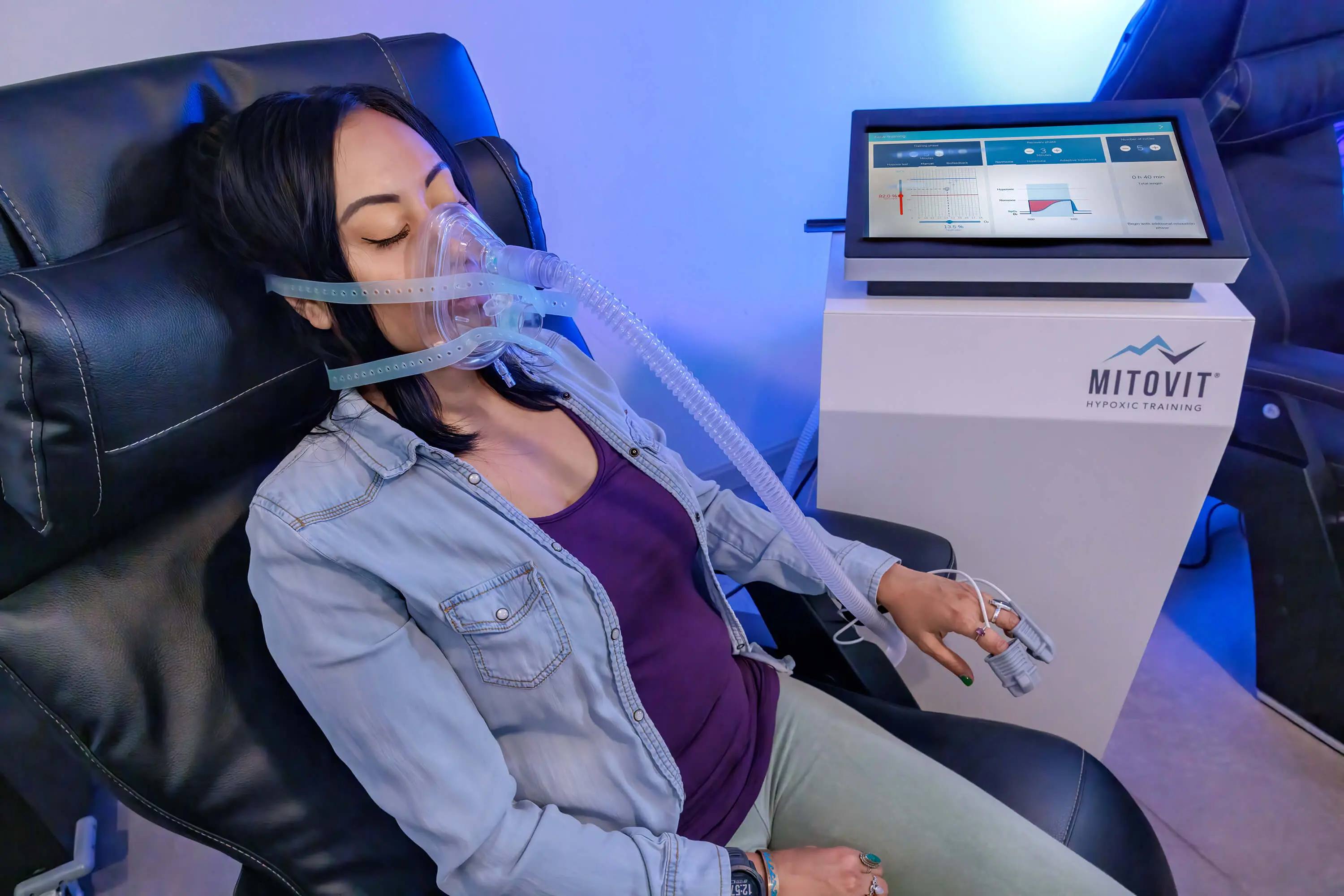
Hypoxic therapy, altitude training or intermittent hypoxic training (IHT) entails breathing low-oxygen air for intervals to achieve positive physiological changes. The treatment denies the body of oxygen in short bursts while a practitioner closely monitors blood pressure, oxygen saturation levels and heart rate. During an IHT session, you’ll receive hypoxic air through a hand-held mask for short intervals and then breathe in normal or hyperoxic air for similar intervals.
Hypoxic therapy aims to increase your hypoxia — low-oxygen — adaptation level and boost your defensive mechanisms. It’s a natural treatment that uses your body’s ability to quickly compensate for disruptions in oxygen intake by adapting to the new environment. Each time you recover from the oxygen intake disruption, your body’s resilience to hypoxia will continue to improve.
IHT boosts the strength of the oxidative process, enabling the oxygen transport system — the circulatory and cell systems and regulators — to dominate in handling your body’s adaptive process.
Studies show that hypoxia-inducible factors (HIFs) may have positive effects on inflammation and the body’s immune response. While our focus is to help you recover from mental and emotional health issues, we use hypoxic therapy to tap into HIFs’ ability to improve mitochondrial activity.
Here are the HIF-related benefits and other advantages you can receive from this treatment:
Choosing us to administer altitude training alongside other treatments for mental and emotional health provides the following advantages:
Our licensed practitioners are experts in addressing substance misuse, depression, trauma, dual diagnosis, anxiety and other mental health disorders. They also have the skills to perform biohacking treatments like IHT safely. That means you can trust us to safely administer any science-based therapies during your recovery journey.
We seek to heal every part of who you are for optimal results, which means our therapies will focus on the mind, body, spirit and soul.
We’ve built our recovery center in a serene environment with nature all around because we understand the healing power of clean air, greenery and beautiful views.
Our center is private and intimate, allowing you to focus on your healing journey without the hustle and bustle of everyday life.
We provide organic gourmet food to ensure you receive the nutrition and energy to heal.
Let’s look at a few more details regarding hypoxic therapy.
While the frequency of hypoxic therapy varies based on your situation, we find that most clients benefit from two to three weekly sessions.
Yes, hypoxic treatment is a safe method of improving your body’s defense mechanisms, though people with respiratory or cardiovascular conditions should consult with their physician first. A skilled professional will monitor the entire process to ensure it runs smoothly.
We’ll begin the therapy with short intervals of three minutes or longer and then increase the duration gradually as your body adapts. Session durations will depend on your adaptive capacity.
If you’re looking for a treatment center offering holistic recovery programs, consider The Sanctuary at Sedona. We specialize in addressing mental and emotional health through biohacking methods like hypoxic therapy and Indigenous traditions. Through our comprehensive and transformational recovery programs and your constant commitment, we believe we can help you regain control of your life.
Complete our online form to receive a call from one of our care providers who will talk about treatment and admission with you.