

Read More
6 min read

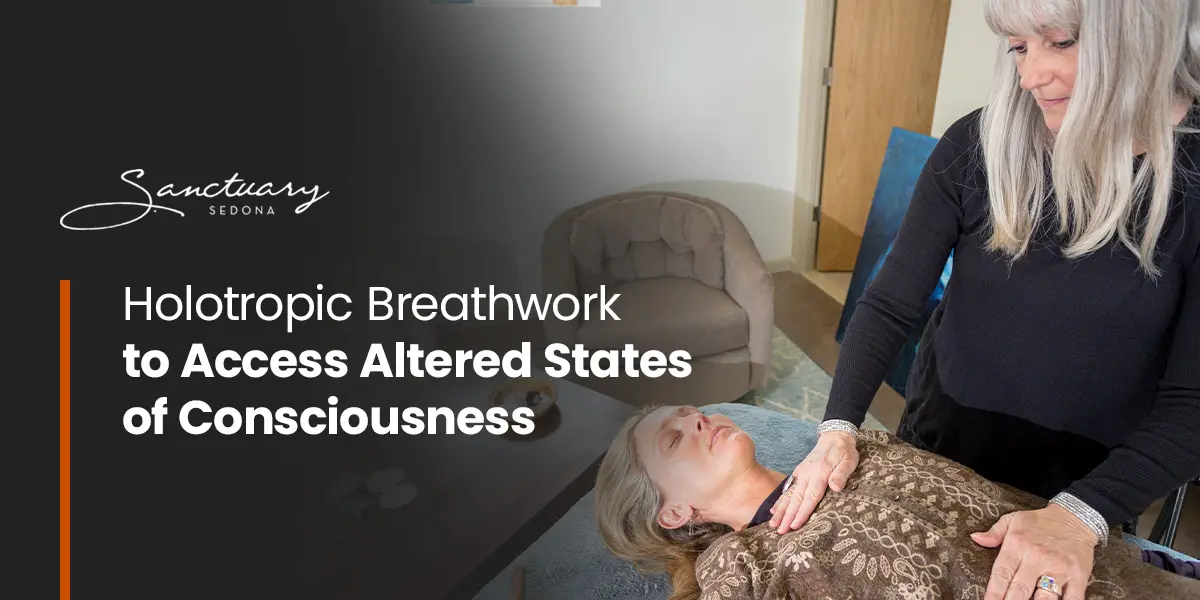
Many people experiencing addiction and mental health disorders have found holotropic breathwork to be an effective form of therapy, enhancing mind-body connection in a powerful way. By integrating this approach to access an altered state of consciousness, you can gain a deeper understanding of yourself to help pave the road to healing and a healthier lifestyle.
Learn more about holotropic breathwork for trauma and addiction recovery in this guide.
Holotropic breathwork is a practice that uses quick, controlled breathing patterns to reach an altered state of consciousness or an expanded state of awareness. It has become a popular technique for those seeking a unique self-healing process. It's often used as an integrative, holistic approach to addiction, trauma and other mental health challenges.
Holotropic breathing patterns are used to access the “unconscious” part of the brain and central nervous system that is typically inaccessible. Holotropic breathwork is often practiced in a group setting under supervision from a trained facilitator, though it can also be part of one-on-one sessions. Ultimately, the goal is to achieve personal growth and physical, mental and emotional healing.
Holotropic breathwork's roots trace back to the late 1960s. After lysergic acid diethylamide (LSD) became illegal around this time, psychiatrist Stanislav Grof started exploring alternative methods to enter a non-ordinary state of consciousness. Grof cofounded transpersonal psychology — which studies the transcendental and spiritual aspects of the human experience — with psychologist Abram Maslow.
As a supporter of psychedelic substances for psychotherapy, Grof wanted to facilitate self-discovery for patients experiencing relief from substance addiction and mental illness. He and his late wife, Christina, developed holotropic breathwork as a way to enter a psychedelic-like state without the use of drugs.
They discovered that patients could enter an altered state of consciousness through deep, rapid breathing. Holotropic derives from the Greek words hólos, which means “whole,” and trépein, which means “to move toward something.” This experiment suggested that deep breathing could increase self-awareness, helping patients become more in touch with themselves and the world around them.
Grof started his work at the Psychiatric Research Institute in Prague before moving to Johns Hopkins University in Baltimore. His work was used for patients dealing with drug addiction, psychiatric illness and cancer.

Holotropic breathwork usually takes place in group settings, lasts around two to three hours and involves elements like rhythmic music and focused bodywork. Here's what a typical session might entail:
Holotropic breathing aims to help participants face and address important issues, such as addiction and trauma. There aren't specific expectations or guidelines of what breathers must experience — they are free to work on whatever they see fit as they enter the altered state of consciousness.
Holotropic breathing can sound intimidating and stressful at first, especially for people living with trauma or anxiety. However, participants usually find that it has the opposite effect. This type of breathwork is known to help address unresolved emotions stored in the body and mind, helping the breather experience the world in a deeper, more colorful way.
Holotropic breathwork is a process of emotional release — so, naturally, it can be either incredibly relaxing or an emotional roller coaster. It might involve waves of sadness, anger or fear. Part of the beauty of holotropic breathwork is that each person's experience is unique, and they have a safe environment to release their pent-up emotions.
While participants are encouraged to push through and address their emotions, they can refrain from continuing if the sensations become overwhelming.
The advantages of holotropic breathwork for mental health and addiction recovery include:
If you're seeking freedom from addiction, anxiety or trauma, holotropic breathwork could be a paramount step in your healing journey. At The Sanctuary at Sedona, our holistic treatment program focuses on meeting you where you are, healing the whole body, getting to the root of the issue and ultimately helping you live your best life. We offer a wide range of therapy approaches, including holotropic breathwork, to help you overcome addiction and mental health challenges.
You don't have to do it alone. Our compassionate team at The Sanctuary is ready to walk the road to recovery with you. Call (928) 325-7212or contact us online to learn more about our holistic treatment options.